Agarose magnetic microspheres| Magarose-OH
- BrandMagarose®
- Type

1. Overview
Agarose is a linear polymer with a basic structure of 1,3-linked β-D-galactofuranose and 1,4-linked 3,6-anhydrated α-L-galactofurase. Agarose is generally dissolved in water when heated to above 90°C, and forms a good semi-solid gel when the temperature drops to 35-40°C, which is the main feature and basis for its multiple uses. Agarose gel performance is usually expressed in terms of gel strength. The higher the strength, the better the gel performance. The strength of the better agarose is usually above 1200 g/cm2 (1% gum concentration). The gelability of agarose is caused by the presence of hydrogen bonds, and any factor that can destroy the hydrogen bond can lead to the destruction of the gelability. Agarose is hydrophilic and almost completely absent of charged groups, and it rarely causes denaturation and adsorption to sensitive biological macromolecules, making it an ideal inert carrier.
After unremitting efforts, in 1967, the natural linear polysaccharide - agarose was isolated from agar, because it has the following important advantages, and has been widely used in macromolecular separation and purification for nearly 50 years. Features of agarose base rack:
a) has excellent biocompatibility, is "protein-friendly";
b) It has a porous structure that allows large molecules such as proteins to pass quickly;
c) It has physical and chemical stability, has a certain mechanical strength, and is convenient for CIP;
d) It has chemical versatility and can be coupled with various ligands, ensuring a variety of application fields of fillers;
e) Has low non-specific adsorption, which is especially important in affinity chromatography.
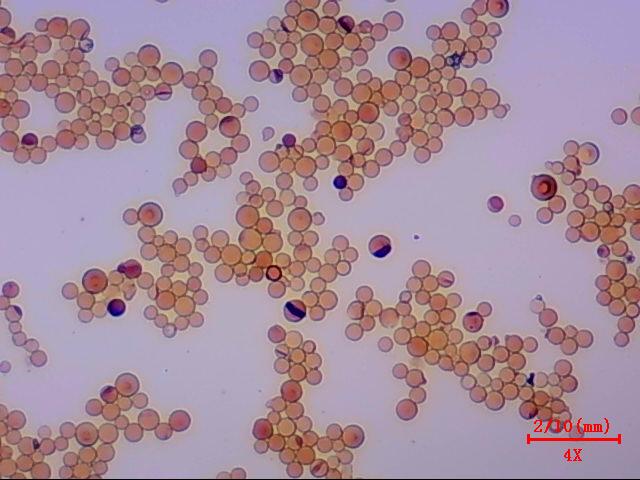
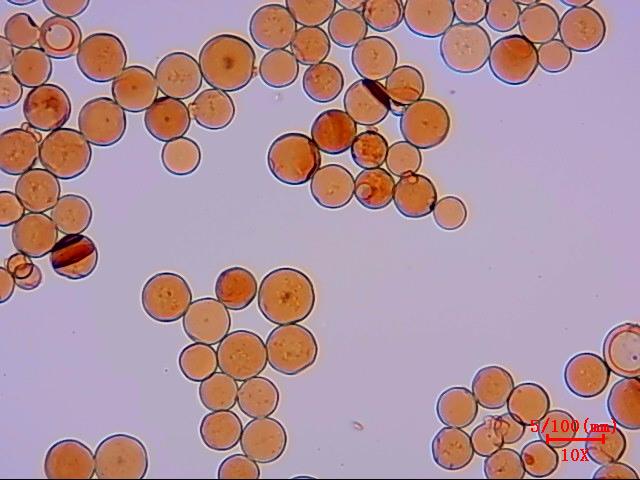
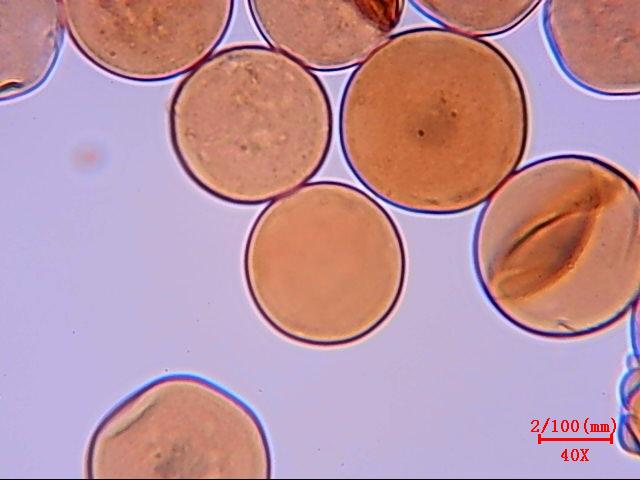
Magarose magnetic beads are made up of 6% agarose cross-linked microspheres containing superparamagnetic particles with a diameter of 20~45 μm. The magnetic beads can be quickly separated from suspensions under magnetic fields, significantly accelerating the reproducibility of operations and experiments.
2. Product characteristics
|
Product Name |
Magarose |
|
Item number |
PMAG010 |
|
Magnetic bead concentration |
25% (v/v) in 20% ethanol |
|
ligand density |
Hydroxyl group (-OH). |
|
Medium |
6% cross-linked magnetic agarose |
|
Particle size |
20-45 μm |
|
Magnetic type |
Superparamagnetic |
|
Save |
Store at 2~8°C for two years |
3. Product advantages
1) The surface is densely packed with rich hydroxyl groups, which can be specially modified by crosslinking reagents to make them into agarose magnetic beads with special functions, which are used for conjugating or separating and purifying different substances;
2) The surface of agarose has the significant characteristics of low non-specific adsorption.
3) It contains superparamagnetic particles, which makes the agarose microspheres have fast magnetic response, which can greatly save operation time and facilitate automatic operation;
4) 6% agarose cross-linked microspheres have higher rigidity to avoid swelling and rupture caused by shear or solvent action;
5) 6% agarose cross-linked microspheres have a smaller pore size, which can minimize non-specific adsorption caused by protein entering the pores.
6) Size distribution of 20-45 μm, giving it excellent suspension characteristics.
4. Product pictures